Thursday, April 29, 2010

Public forums provided valuable feedback on family home rules

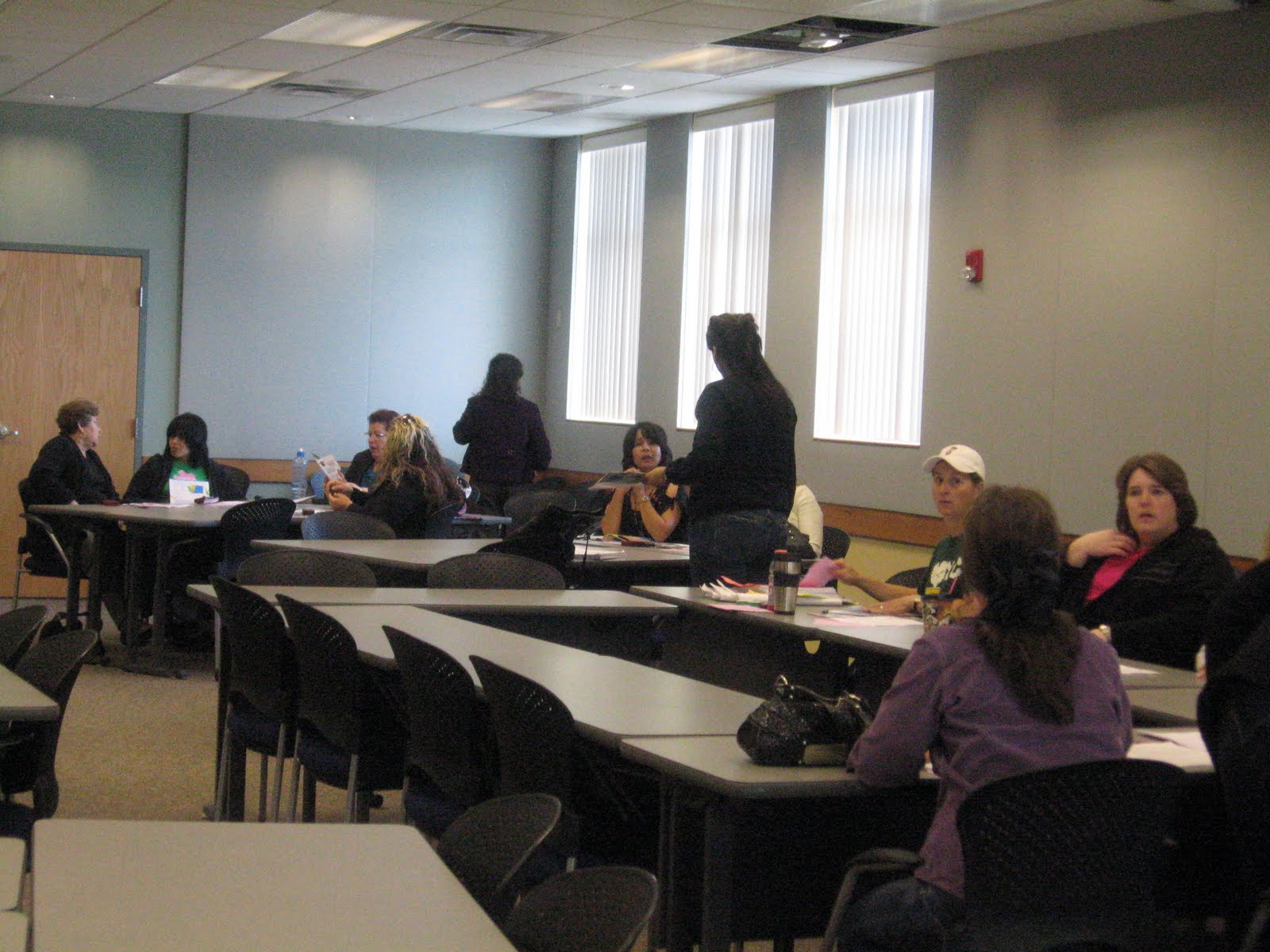
During the past three weeks, DEL staff members have visited eight cities throughout the state to collect comments on recommended changes to the licensed family home child care rules. To view the recommended draft rules, click here.
About 200 attendees total were at the eight meetings. We visited Tumwater, Vancouver, Everett, Seattle, Kent, Spokane, Pasco and Wenatchee.

“Some of the provider groups had been meeting prior to the forums to review and draft comments. Some were hearing the information for the first time,” said Judy Jaramillo, DEL policy analyst. “I was impressed with the passion that was expressed by the participants. We received some very valuable input and will continue to compile the comments as we move forward with the next draft.”

DEL is revising rules for licensed family home child care in Washington Administrative Code (WAC) chapter 170-296, using a unique process called “negotiated rule making.” Recommendations came from the Negotiated Rule Making Team, which included a large representation of child care providers, SEIU staff, DEL staff, Child Care Resource & Referral staff, provider advocates and parent advocates. For more information about the team and the process, visit our negotiated rule making web page.

The next steps will be for DEL to review all the comments, then write the next draft. For questions about the process, e-mail rules@del.wa.gov.

When the new WAC is adopted in December 2010 it will completely replace the current rules. Until the final draft is adopted, the current Family Home WAC is still in effect.

Thank you to everyone who participated and provided feedback during this important process!

Tuesday, April 20, 2010

Tribal Conference builds knowledge, partnerships in Tacoma

About 180 people from tribal early learning programs around the state gathered on Friday and Saturday at the 2010 Tribal Early Care & Education Conference at Hotel Morano in Tacoma.
The event opened with a prayer and song from Connie McCloud of the Puyallup Tribe, followed by welcoming remarks from DEL Director Bette Hyde (see photo at right).

Hyde described the many state programs and initiatives that tribal representatives have provided feedback on and helped create, including the draft Early Learning Plan, the pilot Washington Kindergarten Inventory of Developing Skills (WaKIDS) and the review of the Washington State Early Learning and Development Benchmarks.

“Our state efforts are better for the conversations with the tribes,” she said.

Keynote speaker Dr. Martin Brokenleg, of Reclaiming Youth International, had the audience both laughing and in tears with stories of children’s resiliency and uniqueness. His talk focused on four key areas that can help build strength of spirit in a child: a sense of belonging, generosity, belonging and mastery.

“Your students will forget what you say to them, but they won’t forget how you make them feel,” he said. Brokenleg encouraged providers to see the future possibilities all children have within themselves.

DEL sponsors this conference to build partnerships and provide learning opportunities for those who work for or are affiliated with a tribal early learning program. In break-out sessions, participants learned about creating a baby-friendly environment, fun kids’ activities, and adding song into their programs (see photo at left of presenter Lorraine Bayes) as well as other topics.

To learn more about ways DEL partners with Tribal Nations, visit our website.

Monday, April 19, 2010

DEL Parent Advisory Group: Informing early learning in Washington

The DEL Parent Advisory Group (PAG) met April 15 and 16 to give DEL input on policies and programs. This enthusiastic group contains individuals from around the state who represent families who use state services such as child care subsidies and our free preschool program, as well as diverse family structures such as grandparents raising children, foster parents and blended families. Click to learn more about the group.

A highlight for parents was a great conversation about strengthening early learning and building strong local programs with DEL Director Bette Hyde and state Representative Ruth Kagi (see photo, above right).

At last week’s meeting, members also provided valuable input on recommended changes to the family home child care rules. The group discussed how a child care provider can support young children in getting their needs met, helping them learn to get along with others, and preparing them for success in school, including:
  • How family home child care settings can support diversity: family traditions shared in the family child care home, as well as books, toys and foods that represent our diverse society. Exposing kids to multiple languages is a plus, too!
  • How child care providers can use enrollment time to learn about the child and the family, including learning about the child’s unique characteristics, strengths and needs.
  • Outdoor environments, health procedures, emergency preparedness, overnight care and screen time in family home settings.
This valuable input will be used in developing the family home licensing rules. Everyone can provide input to these rules by visiting the Rules Comment Page between now and the end of April.

With the generous support of our private partner, Thrive by Five Washington, the parents participated in two action-packed days at the DEL state office in Lacey. We appreciate our PAG’s wisdom, insight and honesty!

Wednesday, April 14, 2010

Early learning fares well in tough session

The Legislature adjourned on Monday night, after a special session in which they found a way to close a $2.8 billion revenue shortfall. That’s in addition to $9 billion in cuts already made to the 2009-2011 biennial budget.

As we expected, the budget is filled with tough choices that will affect real people. In the end, though, our Governor and Legislature demonstrated that our state’s youngest learners are still a top priority.

The supplemental operating budget is a big document, and we are still analyzing it and determining how it affects early learning funding. An initial overview of the impacts from the budget on Department of Early Learning (DEL) programs:
  • Transfer of the Infant Toddler Early Intervention Program from the Department of Social and Health Services to DEL effective July 1, and renames it Early Support for Infants and Toddlers. More about this exciting move soon!
  • Reduction of 29 slots in our Early Childhood Education and Assistance Program (ECEAP).
  • Funding for the Washington State Child Care Resource & Referral Network in FY 2011 is reduced ($212,000 savings).
  • Savings in the Working Connections Child Care subsidy program:
    • Allowing single parents with children under the age of 6 to meet 20 hours per week of work participation hours rather than the current 32 hours per week ($11 million savings).
    • Asking DEL to reduce and transfer staff and enter into a memorandum of agreement with DSHS to provide WCCC policy operations support. The budget language still indicates that DEL is the lead agency for and recipient of the federal Child Care and Development Fund grant.
  • Funds for home visiting services are transferred from the Council for Children and Families to DEL. DEL will contract with Thrive by Five Washington to deliver these services ($300,000 transfer). An additional $200,000 is provided for Thrive in the home visiting services account to be administered by DEL.
  • New funding and staff support for DEL and OSPI to implement SSB 6759, requiring DEL and OSPI to convene a technical working group to develop a comprehensive plan for a voluntary program of early learning, is provided to DEL.
  • New funding is provided for DEL to contract with Reach Out and Read for early literacy programs ($150,000).
  • Child care licensing:
    • DEL is authorized to increase child care center licensure fees in FY 2011.
    • DEL is required to submit a plan for improving child care licensing to the Legislature by January 15, 2011 (no additional funds provided).
  • Along with many state agencies, DEL is also facing administrative reductions.

Washington one of six states chosen for NGA policy academy

Exciting news for the Department of Early Learning and for families in our state: Our state is one of only six in the nation selected for an upcoming “policy academy” with the National Governors Association Center for Best Practices!

So what does this mean? These six states (us, along with Oregon, Kansas, Louisiana, Rhode Island and Vermont) will receive interactive support and guidance from national experts to help us with a key early learning initiative important to our state. For Washington, that means our continued efforts on Seeds to Success, our quality rating and improvement system. The purpose of a QRIS is to help improve quality in child care and give families information about how to determine quality.

This support from the NGA will help us as we create a clear action plan for the next phase of Seeds to Success testing, so that we can create a QRIS that is sustainable, and supports child care providers in ensuring quality child care environments for children. In addition to DEL, the Washington team includes representatives from Thrive by Five Washington, educational service districts, the Department of Social and Health Services, and the University of Washington.

Read the NGA press release announcing the six states that will be part of the Ready States: A Project to Develop Key Components of State Early Childhood Infrastructure policy academy.

Tuesday, April 13, 2010

Week of the Young Child


It’s the Week of the Young Child, a great opportunity to talk about why early learning is so important! The week is an annual celebration sponsored by the National Association for the Education of Young Children (NAEYC). (Check out resources there too.)


Experts now know that about 85 percent of brain development happens in the first three years. That’s faster than any other time in life. What does that mean for parents, child care providers, teachers and other important adults in kids’ lives? It means we all need to work to together to help create high-quality learning opportunities to take advantage of those growing brains!

Learning is much more than colors, shapes, numbers and letters. Learning begins at birth. It’s made up of everyday opportunities like singing songs, playing hand games, and comforting your child when she’s upset. Kids who have nurturing and supportive experiences in their early years are much better prepared to succeed in school and life.

So what can you do to help celebrate this exciting phase of development with a child in your life?

Take advantage of everyday learning moments.

Click here for a list to get you started from our private partner, Thrive by Five Washington.

Attend a library, zoo or park with a child

Click here to find Web sites that can help you find activities in your area.

Learn about child development

The Washington State Early Learning and Development Benchmarks are early learning guidelines that are helpful in understanding what young children may know and do at different ages. They are a research-based tool to support parents, early learning educators and caregivers in helping children grow and learn. This is only a resource document—every child develops as an individual in the context of his family, culture and community.  Click here for a guide for parents.

Wednesday, April 7, 2010

Register for Tribal Conference

Only a few days are left to register for this year’s Tribal Early Care & Education Conference on April 16 and 17. DEL sponsors this event to build partnerships and provide learning opportunities for those who work for or are affiliated with a tribal early learning program. The event is free for eligible early learning professionals and will offer break-out sessions and networking opportunities. The deadline for registration is April 12.

“This conference is a wonderful chance for those who work with tribal early learning programs to gather and learn from each other,” DEL Director Bette Hyde said. “We all share a common goal of creating fun environments where kids can grow and learn.”

This year, the conference will take place at Hotel Morano in Tacoma and feature keynote speaker Dr. Martin Brokenleg, who serves as a Vice President of Reclaiming Youth International, providing training for individuals who work with youth at risk. He’ll talk about how those who work with young children have an opportunity to help positively strengthen children from within.

Dr. Brokenleg is an enrolled member of the Rosebud Sioux Tribe, practicing the culture of his Lakota people.

Conference breakout sessions include: creating effective circle times; recycling items for art; preparing for and responding to emergencies; preserving language for tribal children; and storytelling, literacy and language.
Almost 200 participants representing the majority of the 29 federally recognized Tribal Nations in Washington attended the last conference hosted by the Tulalip Tribes. (See photo from that conference during a group activity).

Attendees are responsible for room and travel costs. Eleven STARS hours or NWIC credit are available.

To register, visit http://www.educationaltrainingpartners.org/  For the Hotel Morano, call 866.986.8083 and reference the conference name to obtain the conference rate.